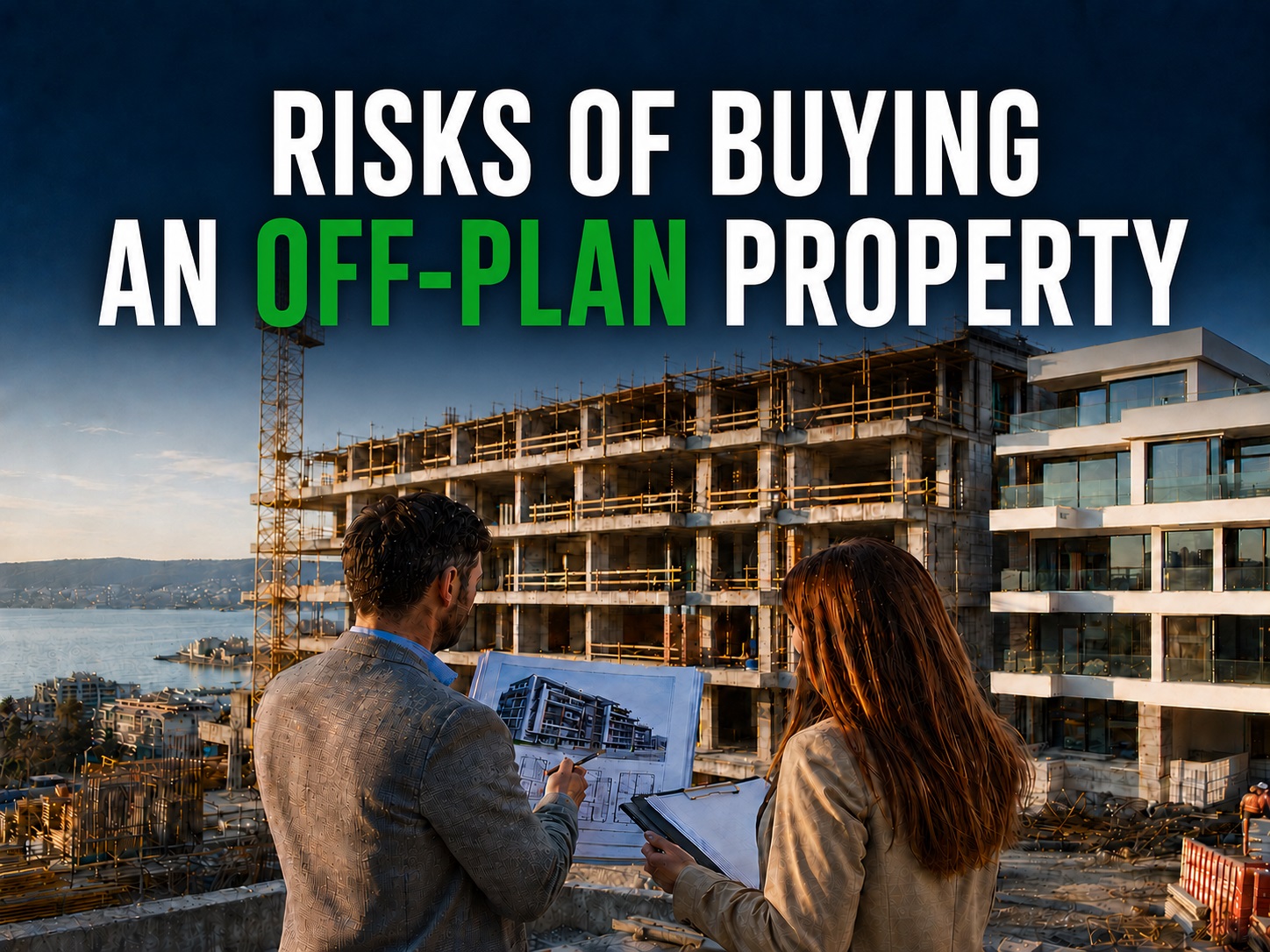
Buying an off-plan property often sounds like an excellent deal – a lower price, a wider choice and the possibility that the property will increase in value before it is even completed. However, beautiful visualisations can sometimes conceal serious risks that may turn your dream home into a costly mistake. With the active development of new construction in Varna and along the Black Sea coast, it is especially important to know what to check before paying a deposit or signing a contract.
What does buying an off-plan property mean?
This means purchasing an apartment that is still under construction or exists only as a project. Sales may begin before the construction site has even been opened or when the building has already reached a particular stage. The buyer usually signs a reservation agreement or preliminary contract and pays part of the price. The remaining amounts are paid according to the agreed payment schedule.
Why is buying an off-plan property so attractive?
The main advantage is usually the lower price. The earlier you enter the project, the more favourable the offer may be. If the project is completed successfully, the value of the property often increases before the building is commissioned for use.
Another advantage is the wider choice. At an early stage, you can choose a better floor, orientation or layout. Certain changes to the internal layout may also be possible in some cases.
-
Other advantages include:
-
new electrical, water supply and sewerage systems;
-
modern communal areas;
-
better energy efficiency;
-
the option to pay in instalments;
-
less need for major renovation work.
However, these advantages are valuable only if the building is completed on time, to the promised standard and with all the necessary documentation.
What are the main risks?
Construction may be delayed
Delays are among the most common problems when buying an off-plan property. They may be caused by administrative procedures, material shortages, changes to the project, poor organisation or financial difficulties. Even a delay of a few months can create problems, especially if the buyer is paying rent and a mortgage at the same time or has already sold their previous home. The contract should therefore contain specific deadlines and clear consequences if they are not met.
The project may remain unfinished
A more serious risk is that the developer may encounter financial difficulties and construction may stop. Buyers may then be left having paid substantial amounts but without a completed home. Investigating the developer is just as important as reviewing the contract itself. Even a substantial contractual penalty will not be particularly helpful if the company has no funds or assets from which it can be recovered.
The land may be mortgaged or subject to other encumbrances
Many projects are developed with bank financing. In such cases, the land, the right to build or the future properties may be mortgaged. This does not necessarily mean that the transaction is problematic. However, it must be clear under what conditions the specific apartment will be released from the mortgage and when it will be transferred free of encumbrances. Check both the future home and the land on which it is being built. Mortgages, attachments, claims and third-party rights may be recorded in the Property Register.
One apartment may be promised to more than one buyer
As a rule, the preliminary contract is not entered in the Property Register. If the seller is acting in bad faith, there is a risk that the same future apartment may be promised to more than one person. The developer must therefore be investigated carefully, and the property must be described precisely in the contract – including its floor, number, area, orientation, layout and any associated parts.
The completed property may differ from what was promised
An advertising visualisation shows how the project is expected to look, but it does not guarantee exactly what you will receive. Differences may arise in the layout, actual area, quality of materials, windows, façade, communal areas, parking spaces and landscaping. Request a detailed technical specification and make sure it forms part of the contract.
It should clearly specify:
-
the type of window frames and glazing;
-
the thermal and sound insulation;
-
the façade and roof;
-
the entrance and interior doors;
-
the flooring and sanitary equipment;
-
the heating and cooling systems;
-
the lift and the standard of completion of the communal areas;
-
the exact level of completion of the property.
Check whether the developer has the right to replace materials unilaterally. If such a provision is included, specify that materials may only be replaced with others of the same or a higher standard.
It is also important to understand how the area has been calculated. Ask for the net area, communal areas, balconies, basement and other associated spaces to be listed separately. The contract should also state what happens if the actual area differs from the initially stated area after completion.
How should you investigate the developer?
Do not rely solely on an attractive website, a modern sales office and a convincing presentation. Look for genuine evidence of the developer’s experience and reliability.
Check:
-
How long has the company existed?
-
Does it have any previously completed buildings?
-
Have they been commissioned for use?
-
Were the announced deadlines met?
-
What do the buildings look like several years after completion?
-
Are there any complaints from owners?
-
Is there any publicly available information about legal disputes or financial problems?
-
Who owns the land?
-
Which company is actually carrying out the construction work?
-
Visit at least one previous project and, if possible, speak to the people who live there. They can tell you much more about the quality, deadlines and the developer’s attitude after the sale.
What documents should you request?
Do not wait until the preliminary contract is being signed to see the documents. They should be provided and checked before you pay a deposit.
The main documents include:
-
A document proving ownership of the land or an established right to build.
-
An up-to-date cadastral plan of the land.
-
An approved development and investment project.
-
A valid building permit.
-
Documents confirming the opening of the construction site.
-
A certificate of encumbrances for the land and the property.
-
Documents confirming the construction stage reached.
-
Plans and conditions for connection to electricity, water supply and sewerage.
-
Documents concerning road access and the surrounding infrastructure.
It is not enough to be told that “all the documents are at the municipality”. Ask to see them and verify that they relate specifically to the building and apartment being offered to you. The fact that a building has been entered in the cadastral register does not automatically mean that its construction is lawful. The cadastral information, ownership documents, construction papers and actual work carried out must all correspond.
The complete list may vary depending on the type and stage of construction. You can also find out which key documents are required for a property transaction.
What should the preliminary contract include?
Do not sign a standard contract without having it carefully reviewed and adapted to the specific project. It should include not only the price and deadline but also everything you expect to receive.
The contract should clearly specify:
-
an exact description of the apartment;
-
its floor, orientation, area and layout;
-
any basement, garage or parking space;
-
the undivided shares of the building and land or the right to build;
-
the total price and whether it includes VAT;
-
the payment schedule;
-
the deadlines for the individual construction stages;
-
the deadline for the notarised transfer of ownership;
-
the level of completion;
-
the technical specification;
-
the permitted variation in area;
-
penalties for delays;
-
the conditions for terminating the contract;
-
the deadline for refunding the amounts paid;
-
the obligation to transfer the property free of encumbrances.
If you have been promised a playground, controlled access, a swimming pool, landscaping or a particular standard for the communal areas, these promises must also be included in the contract. A verbal agreement is unlikely to protect you in the event of a dispute.
What are the most important warning signs?
Be especially careful if:
-
you are pressured to pay a deposit immediately;
-
you are promised that the documents will be shown after payment;
-
the price is suspiciously low;
-
the building permit is still “expected”;
-
the seller is a newly established company with no history or assets;
-
payment must be made to another person or in cash;
-
the developer can unilaterally increase the price;
-
the deadlines are unclear and there are no meaningful penalties;
-
the description of the materials is vague;
-
the areas stated in the different documents do not match;
-
the land is mortgaged, but there is no clear procedure for releasing the apartment from the mortgage;
-
permanent electricity and water connections are promised without supporting documents;
-
the main selling point is the sea view, but it is unclear what may be built on the neighbouring plots.
A single warning sign does not always indicate a serious problem. However, if several warning signs are present, stop and carry out a more thorough investigation before paying or signing anything.
Investigate the developer, request documents supporting every important fact and do not sign a contract whose terms you do not fully understand. The earlier the stage of construction, the more careful you should be.
If you are considering buying an off-plan property, a newly built property in Varna or a home on the Bulgarian Black Sea coast, contact us. Browse all our current listings at Votchina Realistimo. We will support you throughout the entire process – from selecting and comparing suitable offers to checking the documents, negotiating with the seller and preparing the transaction. Contact the Votchina team, and we will help you assess both the advantages of the property and the potential risks so that you can make an informed decision with confidence.